

Introduction
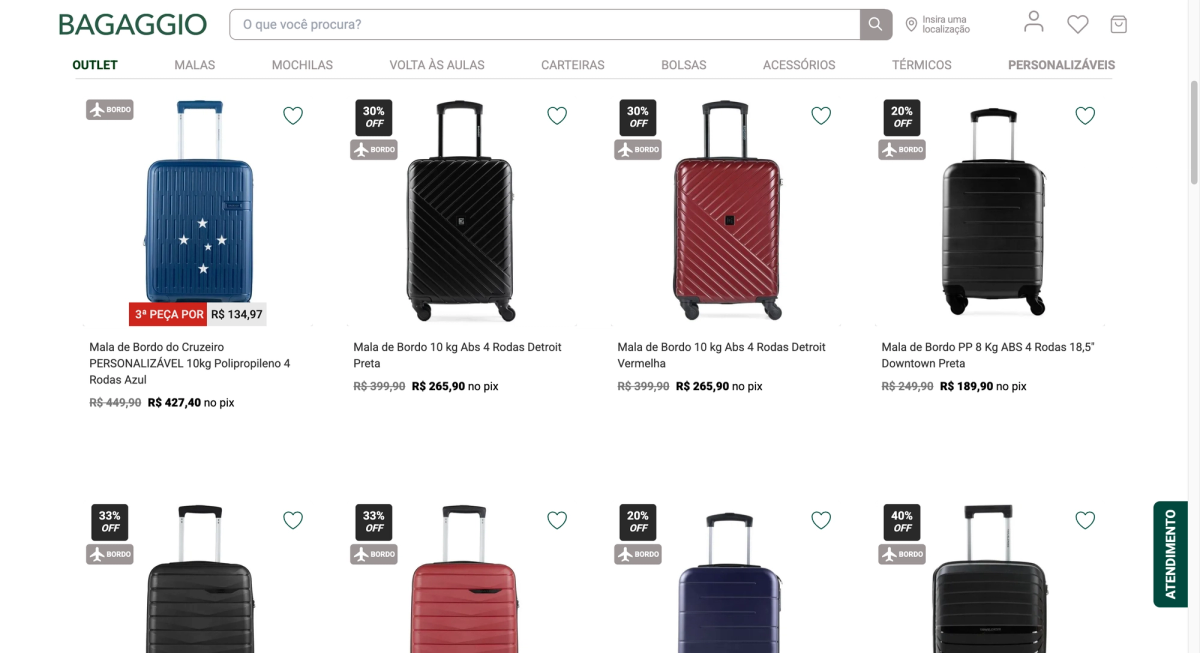
With over 80 years of history, Bagaggio is one of Brazil’s most traditional retailers of luggage, backpacks, and travel accessories. With a nationwide presence, e-commerce plays a strategic role in sustaining its growth and keeping pace with evolving consumer behavior.
The Challenge
Bagaggio faced technical limitations that impacted the speed and flexibility of its e-commerce operation. A tightly coupled front-end and back-end made it difficult to implement quick updates, run optimization tests, and improve the user experience.
Additionally, the heavy reliance on JavaScript scripts affected page load times and overall usability, highlighting the need for a more modern, lightweight, and scalable architecture.
The Strategy
N1 led the evolution of Bagaggio’s e-commerce architecture, focusing on performance, flexibility, and user experience.
The project included migration to Deco.cx and the implementation of lighter interfaces using HTMX, reducing dependency on JavaScript and significantly improving page load speed.
The process was carried out collaboratively across teams, ensuring a smooth transition with no disruption to the customer experience.
Results
The new architecture delivered clear gains in both performance and operational efficiency.
Key Impacts:
- +30% improvement in overall store performance
- 70% reduction in project go-live time
- Faster and more seamless browsing experience
- Stronger technical performance and a more robust foundation for SEO
Strategic Conclusion
This project demonstrates how modernizing technology architecture can directly transform e-commerce performance.
With a lighter and more flexible infrastructure, Bagaggio now operates with greater speed, stability, and capacity for continuous digital evolution—strengthening its online presence and unlocking new growth opportunities.